
Have you ever sat in the dental chair and wondered whether your dentist was speaking English or another language entirely?
Between phrases like “occlusal surface,” “bitewing X-rays,” and item codes that sound like secret spy numbers, it’s no wonder many patients feel a bit lost.
But don’t worry — dental jargon isn’t designed to confuse you.
It’s a professional shorthand that helps dental teams communicate quickly and accurately.
Understanding some of this language can make your next visit a lot less mysterious.
Why Dentists Speak in Code
Like any medical field, dentistry relies on precise terminology. It’s how your dentist describes exactly which tooth, surface, or procedure needs attention. Saying “the upper left first molar has a distal cavity” sounds complicated, but it helps everyone on the dental team know exactly what’s happening.
In Australia, dental professionals often use global terminology but mix in local systems — such as ADA item numbers and insurance codes — that make our dental world a little unique.
Common Dental Terms Explained
Let’s start with some of the words you’ll often hear at your appointment:
-
Plaque and calculus: Plaque is a soft, sticky film of bacteria. If it isn’t removed, it hardens into calculus (also called tartar).
-
Scaling and prophylaxis: Fancy words for professional cleaning — removing plaque and calculus to keep gums healthy.
-
Restoration: A filling or repair to a damaged tooth.
-
Endodontic treatment: Root canal therapy — cleaning and sealing the inside of a tooth.
-
Periodontal treatment: Deep cleaning around the gums to treat gum disease.
-
Occlusion: How your upper and lower teeth fit together when you bite.
-
Fissure sealants: A thin, protective coating applied to the chewing surfaces of back teeth, often used for kids.
Each term helps describe the exact type of care you’re receiving. Once you know what they mean, that “dental language” starts to make perfect sense.
Understanding Australian Dental Item Numbers
Australia’s dental world runs on a system of numbers called ADA item codes, which appear on your invoices and private health fund claims. They might look cryptic, but they’re actually just standardised descriptions of treatments.
A few common examples:
-
011 – Comprehensive oral examination
-
114 – Removal of calculus (clean)
-
531 – Extraction of a tooth
These codes ensure consistency and fairness across clinics, so whether you’re in Melbourne, Perth, or a small country town, “item 114” always means the same thing
The Language of Dental X-rays
You might also hear your dentist mention a few imaging terms:
-
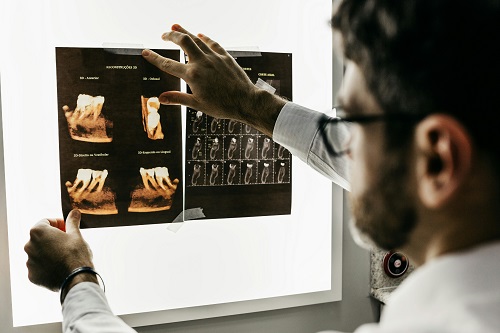
Bitewing: An X-ray showing the upper and lower back teeth together — great for spotting cavities between teeth.
-
Periapical: Focuses on a single tooth and its root.
-
OPG (Orthopantomogram): A wide, panoramic image showing all your teeth, jawbones, and sinuses.
Newer digital tools, like intraoral cameras and 3D scans, add their own high-tech vocabulary — proof that even in dentistry, technology keeps expanding the language.
Familiar Words with Dental Meanings
Sometimes, dentists use everyday words in very specific ways. For example:
-
“Cleaning” usually refers to a professional scale and polish, not just brushing your teeth.
-
“Deep clean” sounds alarming but simply means a more thorough gum treatment.
-
“Cavity” isn’t just a stain — it’s actual tooth decay that needs a restoration.
Knowing these distinctions helps you understand your treatment options — and feel more confident about your oral health.
Decoding Your Dentist’s Notes
Dentists also have a shorthand for describing where a problem is. “UL6” means “Upper Left, tooth number 6” — part of a quadrant system that divides the mouth into four zones. It may look like code, but it keeps records clear and consistent across all Australian practices.
Why It’s Important to Ask Questions
Clear communication is key to good dental care.
Don’t hesitate to ask your dentist to explain any unfamiliar terms — most will be happy to clarify.
When you understand dental language, you gain confidence, reduce anxiety, and become an active partner in your oral health.
The next time your dentist mentions “periodontal therapy” or “occlusal adjustment,” you’ll know exactly what’s going on — and that’s something worth smiling about